Sport Boardroom
 Sport Boardroom
The FIFA World Cup at 96: The Biggest Ever. Now Make Let’s It the Fairest.
By Sgwili Gumede
"Football's power and global appeal entail a considerable degree of responsibility. A commitment to safeguarding the values that make the game fascinating in the first place, and without which its greatness would be at risk." — FIFA President Gianni Infantino, Vision Statement
Ninety-six years. That is how long humanity has gathered around this competition and called it the greatest sporting event on earth. The 2026 FIFA World Cup is its most ambitious expression yet — 48 nations, 104 matches, over 39 days, three co-hosts, and a footprint that spans a continent. That ambition deserves to be celebrated without qualification.
Because the organisations and leaders bold enough to imagine a 48-team World Cup — bold enough to make three nations simultaneous hosts, bold enough to reimagine what global football can be — those leaders are more than capable of confronting what the data beneath the spectacle is quietly telling us. Size is not the same as fairness. Scale is not the same as equity. And the World Cup will not reach its full potential until every team that qualifies for it enters under something closer to equal conditions.
On seeding: structurally legitimate, structurally concentrated
Seeding is not a conspiracy. It is a rational competition balancing tool — it rewards sustained excellence and creates meaningful differentiation. No serious observer disputes that. But in a 48-team draw where your seed position determines not just the road you travel to a final but the chances of success, concentration matters. One region, Europe, will account for 33% of all participants at this tournament and hold 58% of all highly advantageous top-seed allocations. This is a structural observation. The top of the seeding pot travels a meaningfully different road. In the most ambitious World Cup ever staged, we should at minimum be honest about what that road looks like for everyone else.

Seeding has occurred in 21 of 23 editions over 96 years. The winner has been a seeded team in 20 of those 22. Only Cuba in 1938 and Mexico in 2006 were seeded without hosting, outside of Europe and South America. The data is not ambiguous. The structure is working — for some.
On travel: geography amplifies structural disadvantage
This is a World Cup where the travel burden will be among the most demanding, most consequential in the event's history — thousands of kilometres between fixtures, multiple time zones, varied climates, recovery protocols tested to their limits. We know from the physical science and from tournament evidence that travel burden affects performance. Not abstractly. Concretely.
And we know who carries that burden disproportionately. The vast majority of teams facing the most severe travel loads are unseeded. The concentration of travel demand does not distribute randomly across the draw; instead, it follows the fault lines of seeding, confederation allocation, and geography. Three of the top 5 teams that will travel the most are South Africa, DR Congo, and Algeria, along with Bosnia-Herzegovina and Czechia, all unseeded. That is not a coincidence. When the structure amplifies disadvantage rather than mitigating it, that is a design choice. We should name it so.

South Africa, for example, faces over 4,000 kilometres of travel to complete its 3 games — including a trip to Atlanta, Georgia — sandwiched between matches against Mexico and Korea, who do not leave Mexican soil and travel barely 1,000 kilometres. If Bafana Bafana advance, subsequent rounds will structurally present them with elite opponents. Brazil, in their 23rd consecutive appearance, has never faced that particular configuration of peril. That asymmetry is not about quality. The average travel in group stages is 2000km, though some will travel as little as 300km. It is about design. Severe conditions in
On representation: data points that invite reflection
Africa's allocation at this tournament is genuinely historic. Ten teams at a single World Cup — for the first time. That is a milestone, and it deserves to be marked. Yet, Africa and Europe each have 54 to 55 member associations — virtually identical sizes. At this tournament, one in three European members (29%) will be in the final. One in five African members (19%) will be there. Six in ten South American nations will participate. Africa 19% represents the lowest proportional representation of all major confederations, excluding Oceania. These are not grievances. They are data points that tell you something about what a "global" tournament actually looks like in practice. The tournament's growth has not been evenly distributed. That is worth acknowledging.
On financial architecture: compound advantage through structure
The financial picture reinforces what the draw and travel data suggest. Preparatory and qualifying funding distributed ahead of this tournament means European associations receive $200 million before a match is played. African confederations across 10 participating nations receive $125 million. With $870 million in prize money and support funding to be distributed across the tournament, the bulk will predictably flow to confederations with more teams, higher seeds, and therefore statistically longer runs. This is not corruption. It is a compound advantage operating through structure — and it is worth naming as such. Over the last two World Cups, Europe's share of the prize money has been approximately 45%.
On Morocco: a reference point for what the structure demands
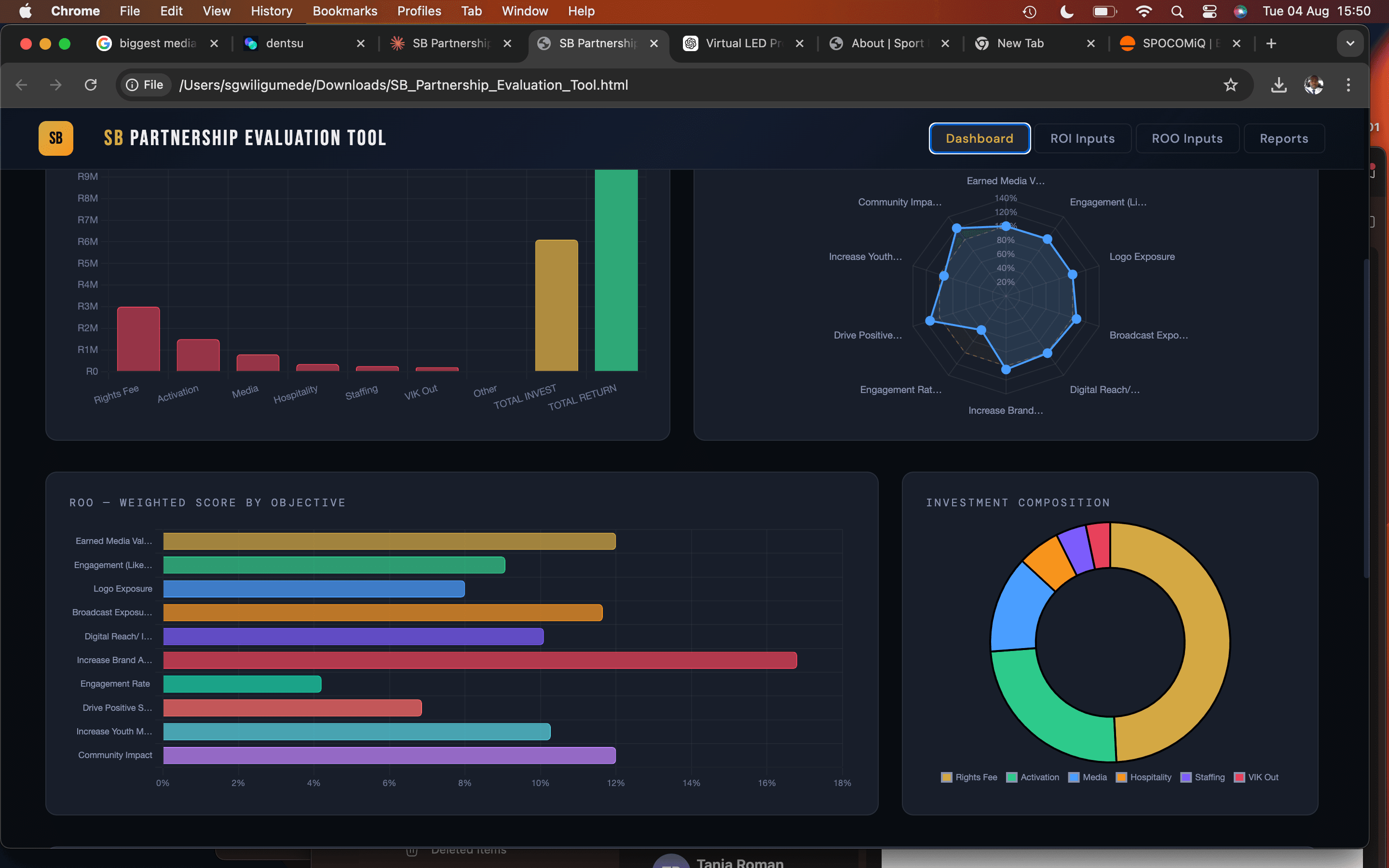
When Morocco faced France in the 2022 semi-final, they were on a run no previous World Cup winner had ever made. To win that tournament, they would have needed to defeat five elite, top-10 calibre opponents. The average World Cup winner has faced two. Our analysis suggests it takes two such opponents to eliminate most seeded sides — and that an unseeded team from outside Europe and South America is likely to encounter their first elite opponent in game four or five. A seeded team is unlikely to face one before game five or six. The graph below illustrates this scenario. South Africa is likely to play 4 such elite opponents before Brazil plays their first.

The seeding effect
That differential is not solely the product of quality gaps. It is structural design at work. A team should not arrive at a World Cup as a rank outsider — and then also face a draw loaded with elite opponents, an artificially elongated path, and travel distances twice the tournament average. Facing any one of those conditions is hard. Facing all three simultaneously is not competition. It is an obstacle course with unequal lanes. That is not fairness. And it is not the founding principle of the competition.
What this moment calls for
Equitable conditions. Fair distribution of outcome-influencing factors. Not a dismantling of what works. Not a naïve levelling of quality. Not equal outcomes. The organisation that found the courage to expand the World Cup to 48 teams, to bring it to three co-hosts simultaneously, to imagine football as a genuinely planetary event — that organisation has both the credibility and the platform to take the next step. Draw mechanics, seeding architecture, travel scheduling, and financial distribution: these are all design choices. The latest UEFA Champions League format presents a workable solution: one log; everyone has the same path; everyone plays an equal number of teams across all tiers. Another example? All domestic cup competitions typically follow an open draw format. 155 years on, the FA cup remains the most incredible competition because everyone can play anyone at any stage, and it has lost none of its aura or prestige. We can redesign them.
No team should come to the greatest competition on earth with the structural deck stacked against them before the whistle blows. On the eve of the biggest tournament ever played, we should celebrate everything we have built — and simultaneously commit to making it fairer. Pay attention to the travel and altitude impact of the match schedule, especially on multi-country hosted events like the 2030 edition.
The spectacle will not reach its potential until every team that earns its place at the World Cup enters under similar conditions, faces similar structural challenges, and travels the same road to glory. This is what the values of the event and FIFA demand, and the world expects of the event of such magnitude and global impact.
Ninety-six years in and 23 editions in, that is not too much to ask.